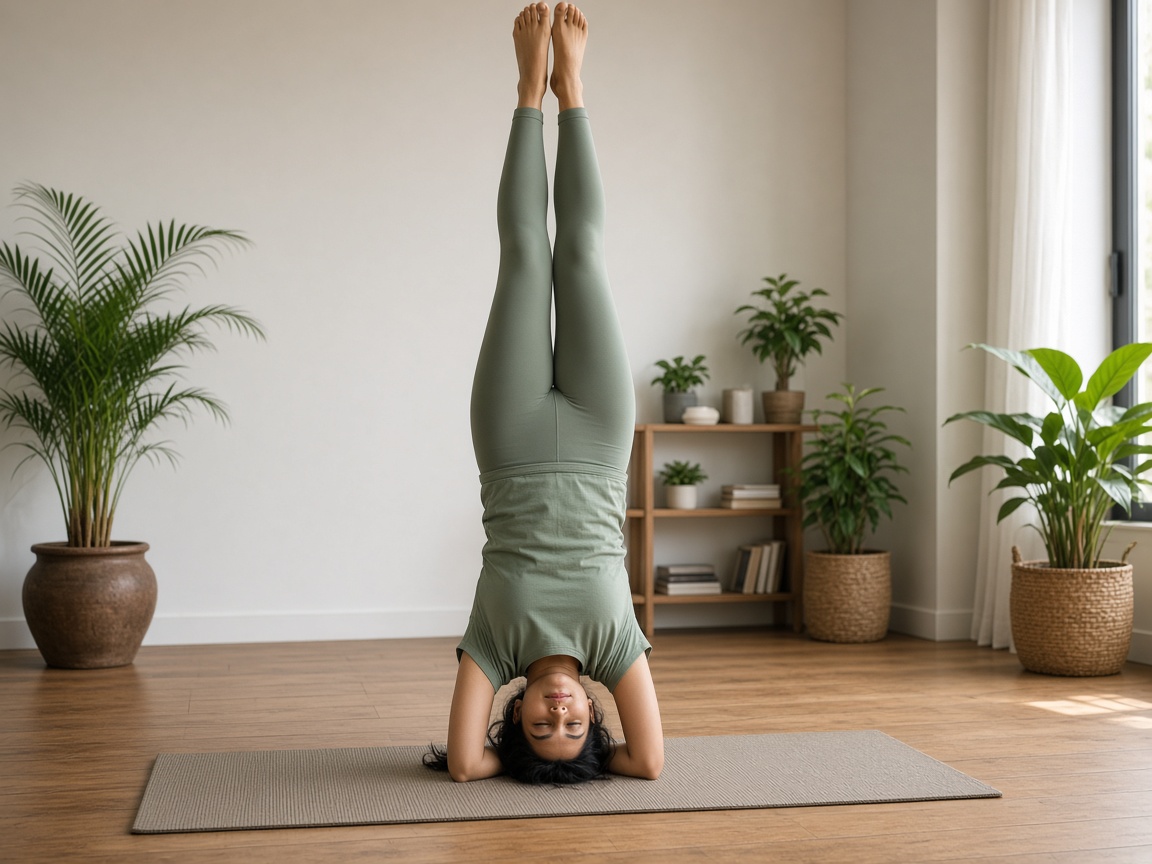
Sirsasana is called the king of asanas. The world turns upside down, the mind becomes remarkably quiet, and the shoulders must be strong enough to protect the neck.
Do not kick up. Do not practise from a video alone. Build Dolphin Pose, Downward Dog and core strength first. This article is a map, not a licence to go upside down unprepared.
How to practise
- Practise at the wall. From kneeling, interlace the fingers, set the forearms down in an equilateral triangle, and nestle the back of the head into the hands.
- Tuck the toes, lift the hips (Dolphin). Walk the feet in until the hips stack over the shoulders.
- Bend one knee, then the other, taking the knees to the chest. Only then extend the legs up, using the wall as a safety net.
- Press the forearms down so the neck stays long. Breathe slowly. Gaze stays neutral.
- To come down, bend the knees and lower with control. Rest in Child’s Pose for at least a minute.
Beginners at the wall: 5–15 seconds. Never stay longer than you can come down with control.
Benefits
- Builds extraordinary shoulder and core strength
- Improves focus, balance and confidence
- A strong inversion that can refresh the mind when practised safely
- Teaches calm under unusual conditions
Precautions
Do not practise with neck issues, high or low blood pressure, heart disease, glaucoma, detached retina, osteoporosis, menstruation, pregnancy, headache or ear infection. If you feel pressure in the head, come down immediately. Learn with a qualified teacher.