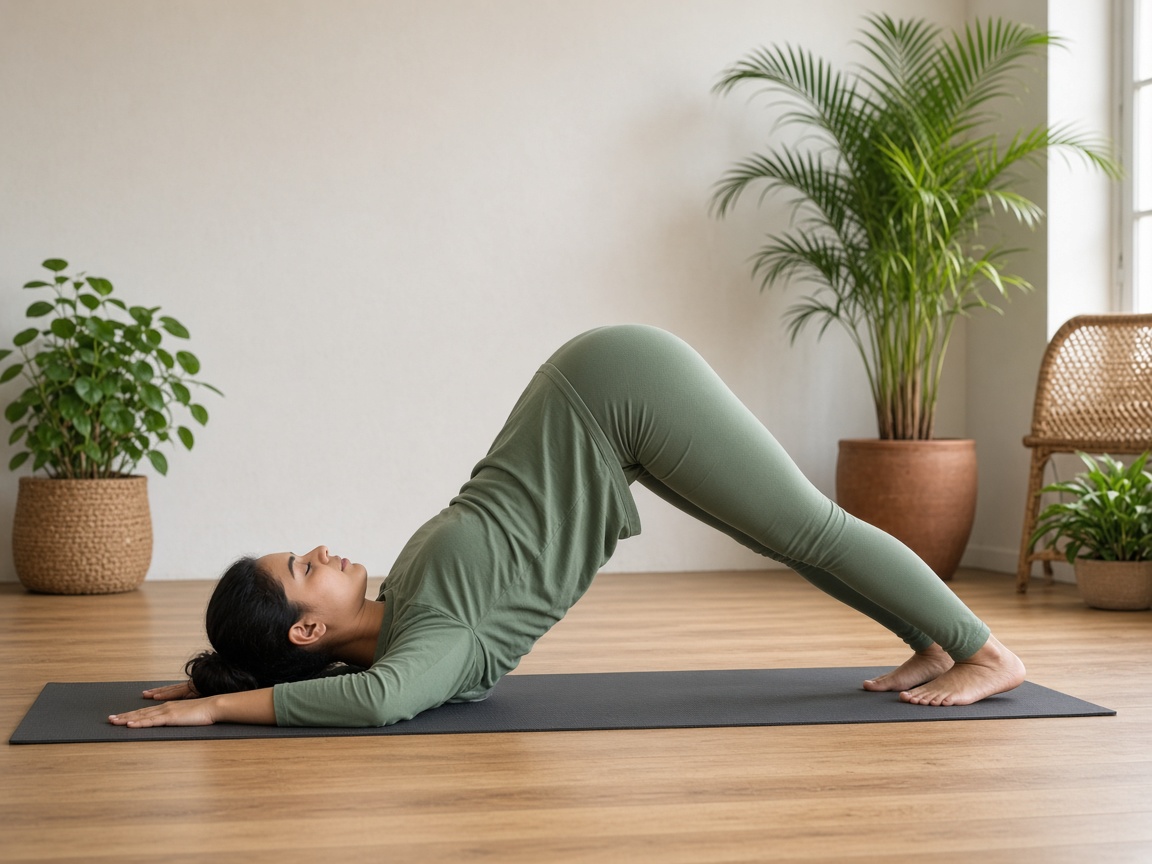
Halasana resembles a plough turning the soil. The torso is inverted, the legs reach beyond the head, and the nervous system turns inward. It often follows Sarvangasana in a classical sequence.
Move slowly. If the feet do not reach the floor, rest them on a chair. Never force the neck.
How to practise
- Lie on the back. Use a folded blanket under the shoulders, not the neck, if you have one.
- Inhale, lift the legs to 90°. Exhale, roll the hips over and take the feet toward the floor behind the head.
- Keep the hands on the back for support, or stretch them on the floor opposite the feet.
- Legs can be straight or slightly bent. Throat stays soft. Breathe quietly.
- To come out, support the back and roll down slowly. Rest, then practise Matsyasana.
Hold 20–60 seconds. Beginners stay for a few breaths only.
Benefits
- Stretches the spine, shoulders and hamstrings
- Calms the brain and can help insomnia and fatigue
- Stimulates the abdominal organs
- Prepares the body for Shoulderstand or follows it as a complement
Precautions
Avoid in neck injury, high blood pressure, glaucoma, menstruation, pregnancy, slipped disc or diarrhoea. Come out at once if you feel pressure in the head or eyes.