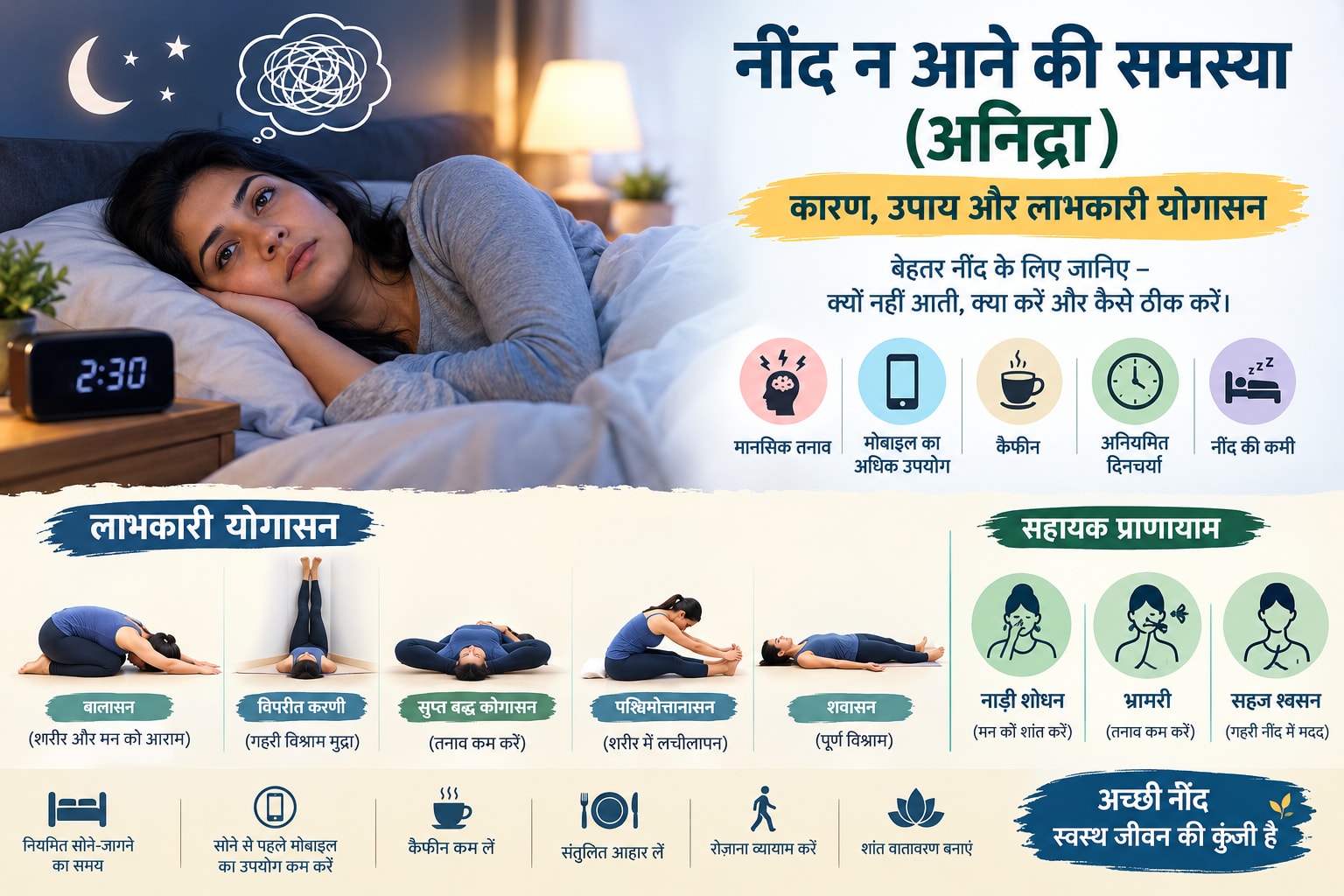

Understanding Migraine: Beyond the Physical Pain
A migraine episode typically lasts anywhere from 4 to 72 hours and brings debilitating symptoms:
- Unilateral or bilateral throbbing, pulsating head pain.
- Extreme sensitivity to light (photophobia) and sound (phonophobia).
- Nausea and vomiting.
- Sensory disturbances or "Aura" (flashing lights, zigzag lines, blurred vision) before the headache begins.
- Extreme fatigue, dizziness, and neck stiffness.
From a yogic perspective, migraines frequently stem from an aggravated Pitta (heat and vascular dilation) combined with an overactive Vata (nervous system hypersensitivity and stress). Restoring equilibrium between these forces is the key to lasting recovery.
The Healing Plate: Migraine-Relieving Diet
Nutrition plays a direct role in migraine frequency. Skipping meals or consuming neuro-inflammatory items triggers rapid neurochemical fluctuations.
1. Nourishing Foods to Include
- Magnesium-Rich Staples: Magnesium calms the nerves and prevents vascular spasms. Prioritize spinach, pumpkin seeds, almonds, and bananas.
- Riboflavin (Vitamin B2) Sources: Essential for cellular energy production. Include fresh curd, lentils, and leafy greens.
- Anti-Inflammatory Ginger: Fresh ginger acts as a natural prostaglandin inhibitor, offering relief from pain and nausea.
- Optimal Hydration: Dehydration is one of the most common migraine triggers. Drink at least 2.5–3 liters of water daily, complemented by coconut water and fresh cucumber.
- Healthy Fats: Walnuts, flaxseeds, and chia seeds provide anti-inflammatory omega-3 fatty acids.
2. Common Trigger Foods to Minimize
- Aged & Fermented Foods: Aged cheeses, soy sauce, and fermented batters contain tyramine, which can trigger blood vessel constriction and dilation.
- Preservatives & MSG: Packaged snacks and fast foods containing artificial nitrates or monosodium glutamate.
- Caffeine Fluctuations: Heavy caffeine intake or sudden caffeine withdrawal can trigger acute attacks.
- Excessive Heat-Inducing Foods: Highly spiced, oily, or stale items that aggravate internal body heat.
Therapeutic Yoga & Pranayama for Migraine Relief
A gentle, restorative yoga practice improves cranial oxygenation, releases tension from the cervical spine, and switches the autonomic nervous system from "fight-or-flight" to "rest-and-digest."
Healing Pranayama (Breathwork)
-
Anulom Vilom (Alternate Nostril Breathing):
Balances the sympathetic and parasympathetic nervous systems, equalizes energy flow, and reduces mental fatigue.
Practice: 10–15 minutes daily on an empty stomach. -
Bhramari (Humming Bee Breath):
The soothing sound vibrations stimulate the vagus nerve and promote neurochemical harmony, relieving intracranial tension.
Practice: 5–7 rounds with closed eyes. -
Sheetali / Sheetkari (Cooling Breath):
Specifically beneficial for Pitta-dominant migraines triggered by heat, anger, or bright sunlight.
Practice: 5–7 rounds to cool the system.
Restorative Asanas
- Balasana (Child’s Pose): Gently stretches the lower back, releases tension across the neck and shoulders, and quiets sensory overload.
- Shashankasana (Hare Pose): Gently stimulates arterial blood circulation to the brain while calming emotional stress.
- Adho Mukha Svanasana (Downward-Facing Dog): A gentle partial inversion that enhances oxygen flow to the cranial tissues without straining the heart.
- Setu Bandhasana (Bridge Pose): Relieves structural stiffness in the cervical and thoracic spine, easing muscular tension that travels up the neck into the head.
- Shavasana (Corpse Pose): A mandatory closing posture that allows the nervous system to absorb the benefits of the practice, leading to deep neuromuscular relaxation.
Practitioner's Note: During an active, acute migraine attack, avoid vigorous inversions, dynamic flows, or fast-breathing practices like Kapalbhati. Instead, choose complete darkness, hydration, and gentle Shavasana.
Daily Yogic Habits for Migraine Prevention
- Establish Dinacharya (Daily Routine): Wake up and sleep at consistent times; irregular sleep patterns trigger hormonal and neurological instability.
- Follow the 20-20-20 Rule: When working on digital displays, rest your eyes every 20 minutes by gazing 20 feet away for 20 seconds to prevent optical fatigue.
- Protect from Harsh Elements: Use sunglasses and cover your head when stepping out in intense sunlight.
- Maintain a Migraine Journal: Track your daily food, sleep quality, and emotional state to identify personal triggers early.
Final Thoughts
Migraine is your body’s signal that its nervous system is overloaded and calling for balance. By combining a soothing diet, hydrating fluids, and regular breath-centered yoga, you can build lasting resilience against debilitating headaches.
At Sankalp Yogshala, we empower individuals to reclaim their wellness through traditional yoga therapy, lifestyle alignment, and authentic practices tailored to modern living. Embrace conscious breathing, nourish your body, and take the first step toward a migraine-free life.